

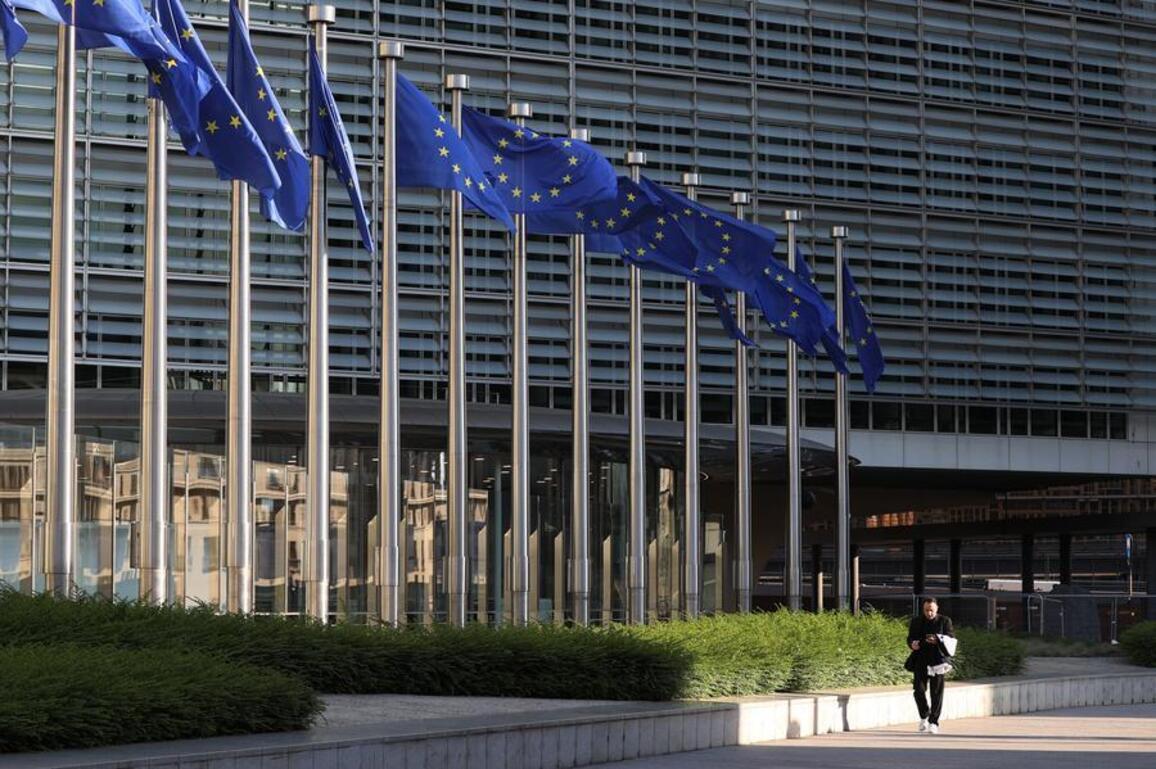
According to KPMG, Central and Eastern Europe (CEE) is undergoing a strategic shift with long-term effects on economic performance, regional cooperation and industrial development.
WARSAW, June 7 (Xinhua) -- As policymakers, bankers and business leaders gathered at the European Financial Congress (EKF) in the Polish city of Sopot this week, many discussions highlighted growing opportunities in Central and Eastern Europe (CEE), where infrastructure projects, EU-funded programs and rising defense spending are generating fresh demand for capital.
Against the backdrop that Europe faces slowing growth and concerns over competitiveness, the question whether CEE could become a new source of growth momentum for Europe has attracted more attention.
RISING INVESTOR INTEREST
Investors seeking new opportunities have increasingly shifted their attention towards regions where major investment needs coincide with stronger growth prospects. Recent data suggest that CEE is becoming one such destination.
According to a report cited by Euronews earlier this year, mergers and acquisitions across CEE reached a record of 42.5 billion euros (48.96 billion U.S. dollars) in 2025, the highest level ever recorded for the region.
The report highlights CEE as an increasingly attractive region for investors seeking growth opportunities in a more challenging European environment. It cited forecasts of the International Monetary Fund (IMF) that Poland will grow by 3.1 percent in 2026, making it one of Europe's stronger major economies, compared with an expected 1.2 percent growth in Western Europe.
Meanwhile, an Ernst and Young report on European foreign direct investment (FDI) released in May, found that FDI declined in Europe's three largest markets -- France, Britain and Germany -- while several Southern, Central and Eastern European countries, including Poland and Spain, saw strong growth.
The report underscores that Europe remains a competitive destination as new centers of growth are emerging across Southern, Central and Eastern Europe, supported by competitive labor costs, available industrial land, ongoing infrastructure investment and expanding digital ecosystems.
DEFENSE INDUSTRY BROUGHT NEW MOMENTUM
Another factor reshaping the region's investment landscape is the rapid expansion of Europe's defense industry.
According to a report recently published by KPMG, the sustained increase in European defense spending and the shift from one-off procurement toward continuous production, stockpile replenishment, maintenance and long-term industrial capacity building have fundamentally altered the sector's investment logic.
The consultancy argues that the center of gravity of defense investment is gradually moving away from Western Europe toward CEE, where countries such as Poland, the Czech Republic and Romania offer competitive costs, established manufacturing capabilities and strong integration into regional supply chains.
The trend is being reinforced by the European Union's Security Action for Europe (SAFE) program, a 150-billion-euro (172-billion-U.S. dollar) financing instrument aimed at expanding joint production and procurement of defense equipment across members.
Speaking at the EKF, Polish Finance Minister Andrzej Domanski said SAFE-related contracts would strengthen Poland's defense capabilities while contributing to broader industrial and technological competencies that support long-term competitiveness.
"For investors and policymakers alike, CEE is no longer an alternative location, but one of the few regions capable of delivering volume, speed, and industrial scale simultaneously in the defense sector," said Adrian Duta, senior adviser for defense and security at KPMG Romania.
TEMPORARY UPSWING OR STRUCTURAL SHIFT
Whether CEE's momentum represents a lasting transformation remains a subject of debate.
The region still faces significant challenges, including demographic decline, labor shortages and exposure to external shocks. Higher energy prices and geopolitical risks could also complicate future growth prospects.
But according to KPMG, CEE is undergoing a strategic shift with long-term effects on economic performance, regional cooperation and industrial development.
Countries in the region are increasingly using their geographic position, institutional alignment, industrial base and skilled workforce to build joint capabilities in production, logistics and innovation at the European level.
Tudor Grecu, an analyst at KPMG, stressed that if CEE countries cooperate effectively and align their industrial strength, "the region will no longer be merely a buffer zone or strategic flank, but an economic and industrial power center essential to the EU's future and Europe's broader stability."